Source: Self-Made
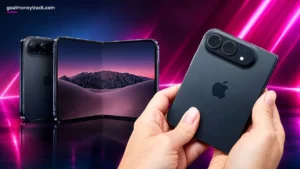
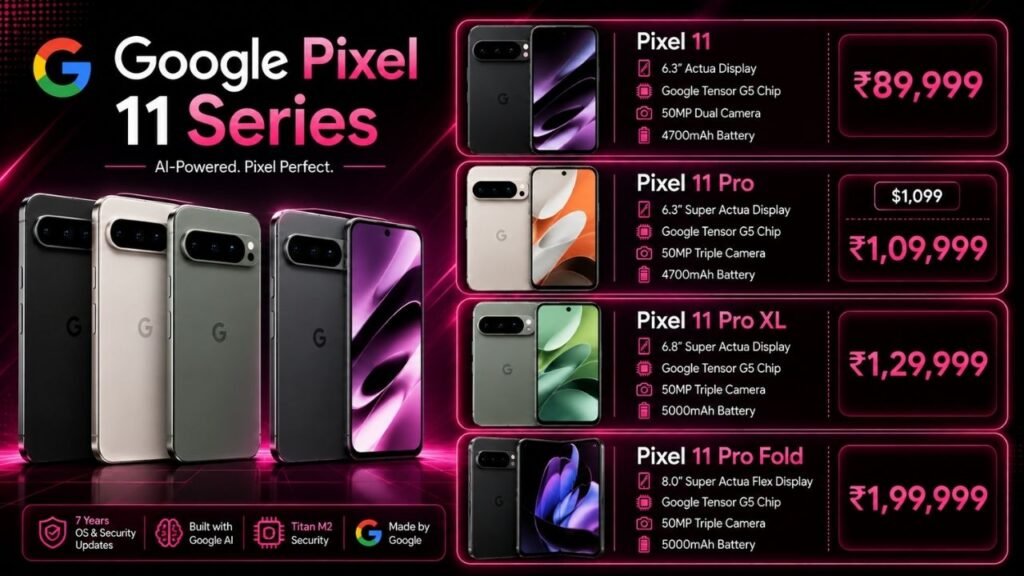
The Google Pixel 11 series was officially launched on August 12, 2026, during the Made by Google event in New York City. It has four models: the regular Pixel 11, Pixel 11 Pro, Pixel 11 Pro XL, and the foldable Pixel 11 Pro Fold. To get the fastest response, pre-orders begin today, with the phones reaching the shelves of stores on August 20, 2026. Each spec, price, and feature they confirmed at launch is listed below.
The event was organised at Google with comedian Trevor Noah in charge of the event. This is a true change of course this year. Storage has begun at 256GB on all models. RAM has leapt exponentially as well, as the phones require more memory to operate Gemini AI locally. It also has a new hardware characteristic that had been previously unexpected.
Google Pixel 11 Series Specifications
A complete breakdown of what each model entails presents itself before delving into details. This table compares display, camera, battery, build quality, and price range.
| Feature | Pixel 11 | Pixel 11 Pro | Pixel 11 Pro XL | Pixel 11 Pro Fold |
| Processor | Tensor G6 (2nm) | Tensor G6 (2nm) | Tensor G6 (2nm) | Tensor G6 (2nm) |
| Security Chip | Titan M3 | Titan M3 | Titan M3 | Titan M3 |
| Display | 6.3″ Acua OLED, 120Hz, 3000 nits | 6.3″ Super Actua OLED, 120Hz LTPO, 3000 nits | 6.8″ Super Actua OLED, 120Hz LTPO, 3500 nits | Inner 8.0″ Flex LTPO OLED, Cover 6.4″ OLED, both 120Hz |
| Build | Gorilla Glass Victus 2, matte frame, glossy back | Gorilla Glass Victus 2, polished frame, matte back | Gorilla Glass Victus 2, polished frame, matte back | Gorilla Glass Victus 2, thinner chassis at 4.8mm open |
| Rear Cameras | 48MP Main, 13MP Ultrawide | 50MP Main, 48MP Ultrawide, 10.8MP Telephoto | 50MP Main, 48MP Ultrawide, 48MP Telephoto (5x) | 48MP Main, 12MP Ultrawide, 10.8MP Telephoto |
| Front Camera | 10.5MP | 42MP | 42MP | 10MP cover, 10MP inner |
| Biometrics | Ultrasonic in-display, face unlock | Ultrasonic in-display, face unlock | Ultrasonic in-display, face unlock | Side-mounted capacitive, face unlock |
| Battery | 4,985 mAh | 4,985 mAh | 5,115 mAh | 5,100 mAh |
| Charging | 30W wired, Qi2 wireless | 30W wired, Qi2 wireless | 45W wired, Qi2 wireless | 30W wired, Qi2 wireless |
| Modem | MediaTek M90 | MediaTek M90 | MediaTek M90 | MediaTek M90 |
| Water Resistance | IP68 | IP68 | IP68 | IP68 |
| Special Hardware | Glass camera visor | HiLight glow ring | HiLight glow ring | Magnetic chassis back |
| Software | Android 17, 7 years of updates | Android 17, 7 years of updates | Android 17, 7 years of updates | Android 17, 7 years of updates |
| Price Range (Global) | $899 to $1,019 | $1,099 to $1,339 | $1,299 to $1,539 | $1,899 to $2,139 |
| Price Range (India) | ₹89,999 to ₹99,999 | ₹1,09,999 to ₹1,34,999 | ₹1,29,999 to ₹1,54,999 | ₹1,89,999 to ₹2,14,999 |
This spec sheet illustrates why the Pixel 11 line feels like a real leap forward. All the models have a common chip and security base. There are, however, a good many variations in camera arrangements and screen sizes towards the higher range.
See Price On
Google Pixel 11 Launch Date and Availability
The Google Pixel 11 launch date was confirmed as Wednesday, August 12, 2026. Google streamed the keynote live starting at 6:00 PM ET, which is 3:00 PM PT. Fans in India had to stay up late, since the event aired at 3:30 AM IST on August 13.
Pre-orders opened right after the keynote wrapped up. So if you are eyeing one of these phones, you can already reserve your unit through the Google Store or major retail partners. Physical retail availability is set for August 20, 2026, which gives buyers about a week to plan their purchase.
| Event | Date |
| Official Announcement | August 12, 2026 |
| Pre-Orders Open | August 12, 2026 |
| Keynote Time (ET/PT) | 6:00 PM ET / 3:00 PM PT |
| Keynote Time (IST) | 3:30 AM, August 13, 2026 |
| Retail Availability | August 20, 2026 |
Knowing the exact Google Pixel 11 launch date matters if you are trying to time a trade-in or grab early pre-order bonuses. Many retailers tend to offer extra storage or accessory discounts during the first few days.
Google Pixel 11 Pricing by Storage Tier
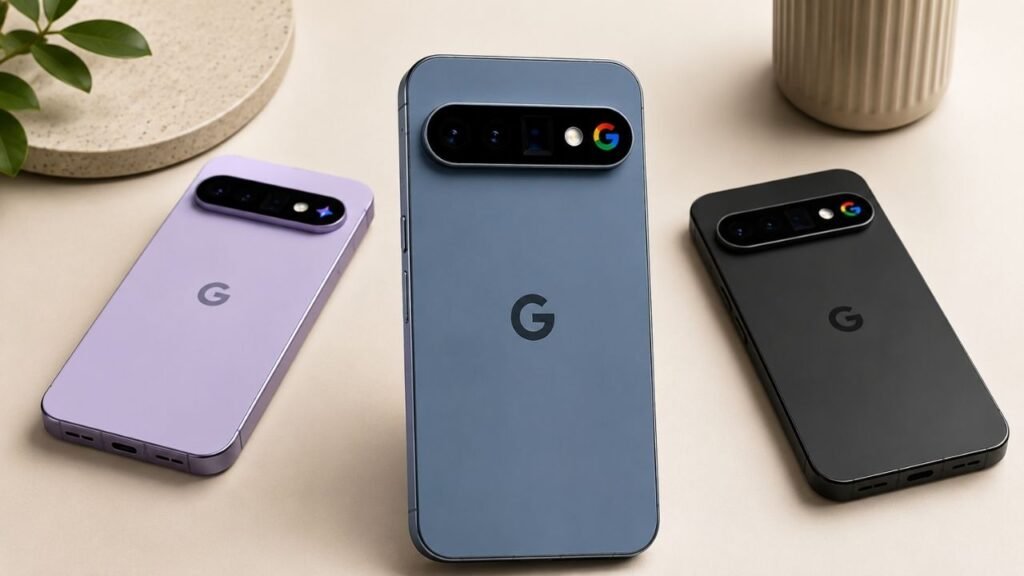
Pricing varies depending on storage capacity and RAM allocation. Higher RAM tiers support smoother on-device AI performance, which explains some of the price jumps between variants.
| Model | Storage | RAM | Global Price (USD) | India Price (INR) |
| Pixel 11 | 256GB | 12GB | $899 | ₹89,999 |
| Pixel 11 | 512GB | 12GB | $1,019 | ₹99,999 |
| Pixel 11 Pro | 256GB | 12GB | $1,099 | ₹1,09,999 |
| Pixel 11 Pro | 512GB | 16GB | $1,219 | ₹1,21,999 |
| Pixel 11 Pro | 1TB | 16GB | $1,339 | ₹1,34,999 |
| Pixel 11 Pro XL | 256GB | 12GB | $1,299 | ₹1,29,999 |
| Pixel 11 Pro XL | 512GB | 16GB | $1,419 | ₹1,41,999 |
| Pixel 11 Pro XL | 1TB | 16GB | $1,539 | ₹1,54,999 |
| Pixel 11 Pro Fold | 256GB | 16GB | $1,899 | ₹1,89,999 |
| Pixel 11 Pro Fold | 512GB | 16GB | $2,019 | ₹1,99,999 |
| Pixel 11 Pro Fold | 1TB | 16GB | $2,139 | ₹2,14,999 |
Notice that the base Pixel 11 sticks with 12GB of RAM no matter the storage size. Meanwhile, the Pro models jump to 16GB once you pick 512GB or higher. This makes sense, because Google wants the higher-tier phones to handle heavier local AI tasks without lag.
Why Google Killed the 128GB Storage Option
For the first time, Google removed the 128GB tier entirely. Every single Pixel 11 model now ships with 256GB as the absolute minimum. This move puts real pressure on competitors that still offer lower storage entry points.
The reasoning behind this decision ties directly to on-device AI. Local Gemini models take up storage space and demand faster read speeds. Therefore, Google decided that squeezing users into 128GB would hurt the overall experience. As a result, buyers get more room for apps, photos, and offline AI features right out of the box.
Tensor G6 Processor and Performance Gains
Every phone in this lineup runs on the new Tensor G6 chip. Google built this processor on a 2-nanometer process, which is a significant jump from previous generations. This smaller process node typically leads to better efficiency and less wasted power.
Early benchmarks point to solid multi-core performance improvements. More importantly, thermal management has clearly improved too. Older Pixel phones were often criticized for overheating during demanding tasks like gaming or video recording. The Tensor G6 seems to directly address that complaint.
TSMC Manufacturing Shift
Google also switched its manufacturing partner to TSMC for this chip. This change explains much of the efficiency boost. Idle battery drain, which frustrated many long-term Pixel owners, should be noticeably reduced this year.
Display Specifications Across the Lineup
Screen quality varies quite a bit depending on which model you pick. The standard Pixel 11 gets a solid OLED panel, while the Pro models step up to brighter, smoother displays.
| Model | Display Type | Size | Refresh Rate | Peak Brightness |
| Pixel 11 | Acua OLED | 6.3 inches | 120Hz | 3,000 nits |
| Pixel 11 Pro | Super Actua OLED, LTPO | 6.3 inches | 120Hz | 3,000 nits |
| Pixel 11 Pro XL | Super Actua OLED, LTPO | 6.8 inches | 120Hz | 3,500 nits |
| Pixel 11 Pro Fold | Flex LTPO OLED (inner), OLED (cover) | 8.0 inches inner, 6.4 inches cover | 120Hz both screens | Not specified |
The Pro XL clearly leads on brightness, which helps a lot during outdoor use. LTPO technology on the Pro models also means better battery efficiency, since the screen can adjust its refresh rate based on what you are doing.
Camera Setup: Main, Ultrawide, and Telephoto Breakdown
Camera hardware differs significantly across the lineup. The base Pixel 11 sticks with a simpler dual-camera setup, while the Pro and Pro XL models add a proper telephoto lens.
Pixel 11 Camera Details
The standard model keeps things simple with a dual rear setup. It skips the telephoto lens entirely, which is the main trade-off for choosing the base model.
| Camera | Specification |
| Main | 48MP, f/1.7 |
| Ultrawide | 13MP |
| Front | 10.5MP |
Pixel 11 Pro Camera Details
The Pro model adds a genuine telephoto lens, giving you far more flexibility for zoomed shots and portraits.
| Camera | Specification |
| Main | 50MP |
| Ultrawide | 48MP |
| Telephoto | 10.8MP |
| Front | 42MP |
Pixel 11 Pro XL Camera Details
The Pro XL pushes further with a stronger telephoto sensor, supporting up to 5x optical zoom.
| Camera | Specification |
| Main | 50MP |
| Ultrawide | 48MP |
| Telephoto | 48MP (5x optical) |
| Front | 42MP |
Pixel 11 Pro Fold Camera Details
The Fold keeps a balanced triple-camera setup while managing to fit everything into a thinner foldable chassis.
| Camera | Specification |
| Main | 48MP |
| Ultrawide | 12MP |
| Telephoto | 10.8MP |
| Front (Cover) | 10MP |
| Front (Inner) | 10MP |
If photography is your top priority, the Pro XL is clearly the strongest option this year, thanks to its 5x optical telephoto lens.
Battery Life and Capacity by Model
Battery capacity increases slightly as you move up the lineup, with the Pro XL and Fold offering the largest cells.
| Model | Battery Capacity |
| Pixel 11 | 4,985 mAh |
| Pixel 11 Pro | 4,985 mAh |
| Pixel 11 Pro XL | 5,115 mAh |
| Pixel 11 Pro Fold | 5,100 mAh |
Interestingly, the standard Pixel 11 and Pro share identical battery capacity. This means the extra camera hardware on the Pro does not come at the cost of battery life, which is a smart balance from Google’s engineering team.
Charging Speeds and Wireless Support
Charging speed is one area where the Pro XL clearly stands out from the rest of the lineup.
| Model | Wired Charging | Wireless Charging |
| Pixel 11 | 30W | Qi2 |
| Pixel 11 Pro | 30W | Qi2 |
| Pixel 11 Pro XL | 45W | Qi2 |
| Pixel 11 Pro Fold | 30W | Qi2 |
Qi2 Wireless Charging Explained
All four Pixel 11 models now support the Qi2 wireless charging standard. Google achieved this by integrating magnets directly under the back panel of each device. This design choice means magnetic wireless chargers and cases will snap into place without needing any special accessories.
The Pro XL’s 45W wired charging is a notable jump over the rest of the lineup. If fast charging matters to you, that extra 15W difference adds up over time, especially for anyone who charges quickly between meetings or during travel.
Advanced Gemini Intelligence and On-Device AI
Google built the Pixel 11 series specifically around on-device Gemini AI. This is why RAM allocation jumped so much for the Pro models. Running large language models locally requires serious memory, and 16GB gives these phones enough headroom to handle it smoothly.
Unlike cloud-based AI, on-device processing means faster responses and better privacy. Your data does not need to travel to a server for basic AI tasks. Consequently, features like live translation, photo editing suggestions, and smart replies should feel instant rather than delayed.
The HiLight Ring: A New Design Feature
One of the most talked-about additions is the HiLight ring, sometimes called Pixel Glow. This feature is exclusive to the Pro, Pro XL, and Fold models. It is essentially an illuminated LED ring built directly into the rear camera bar.
So what does it actually do? The ring works as a visual notification light for incoming calls or messages. It also doubles as a countdown timer when you are setting up a group photo. On top of that, it can show a status indicator while Gemini AI is actively processing a task in the background.
This kind of hardware innovation is rare in the smartphone world these days. Most brands focus purely on software updates. Google, however, decided to add something genuinely new that users can see and interact with physically.
Modem Upgrade: Goodbye Samsung, Hello MediaTek
Google dropped Samsung modems this year in favor of the new MediaTek M90 modem. This change addresses a long-standing complaint among Pixel users. Previous models were often criticized for dropped signals and inconsistent 5G performance.
The MediaTek M90 modem promises better cellular battery efficiency alongside more reliable connections. Early reports suggest this fix genuinely improves day-to-day usability, especially in areas with weaker signal strength.
Software and Long-Term Support
Every Pixel 11 model ships with Android 17 straight out of the box. Google also confirmed its standard 7-year update guarantee, which now applies across the entire lineup. This means these phones will receive software and security patches until 2033, covering updates up to Android 24.
That kind of long-term support is genuinely rare in the Android ecosystem. Most manufacturers offer far shorter update windows. So if longevity matters to you, this alone makes the Pixel 11 series worth considering.
New Ecosystem Accessories
Alongside the phones, Google introduced two new accessories worth mentioning. The Pixel Watch 5 launched as an updated wearable option. Google also debuted its first Bluetooth item tracker, called the Pixel Tag, which is shaped like a pill and designed to compete directly with Apple’s AirTag.
These accessories signal that Google wants to build a tighter, more connected ecosystem around the Pixel 11 lineup. If you already own Pixel devices, these additions might make the overall upgrade even more appealing.
Should You Upgrade to the Google Pixel 11?
Deciding whether to upgrade depends heavily on what you currently own. If your phone is more than three years old, the jump in camera quality, battery life, and AI features will feel substantial. However, if you already own a Pixel 10 series device, the improvements might feel more incremental.
Consider these factors before making a decision:
- Storage needs, since every model now starts at 256GB
- Camera priorities, especially if you want the improved telephoto lens on Pro models
- Battery habits, particularly if fast charging matters to you
- Budget, since prices climb quickly with the Pro XL and Fold variants
Weighing these points against your current device should make the decision much clearer.
Conclusion
The Google Pixel 11 series brings real, tangible upgrades rather than small tweaks. Between the Tensor G6 chip, the HiLight ring, and the expanded on-device AI capabilities, this generation feels like a genuine step forward. The confirmed Google Pixel 11 launch date of August 12, 2026, combined with a retail rollout on August 20, gives buyers a clear timeline to plan around. Whether you choose the standard Pixel 11 or splurge on the Pro Fold, this lineup offers something for nearly every type of user. If camera performance, battery efficiency, and long-term software support matter to you, the Google Pixel 11 is worth serious consideration this year.
Frequently Asked Questions
Google confirmed the launch date as August 12, 2026, during the Made by Google event. Pre-orders opened immediately afterward, with retail availability starting August 20, 2026.
No, Google removed the 128GB tier completely. Every Pixel 11 model now starts at a 256GB baseline.
It is an illuminated ring built into the rear camera bar on Pro, Pro XL, and Fold models. It works as a notification light, a photo timer, and a Gemini AI status indicator.
Yes, built on a 2nm process by TSMC, the Tensor G6 offers better thermal control and reduces idle battery drain compared to older Pixel chips.
Yes, every model supports the Qi2 wireless standard, with magnets built directly into the back panel for easy magnetic accessory compatibility.
Google switched to the MediaTek M90 modem this year, replacing previous Samsung modems and improving both signal reliability and 5G battery efficiency.
Google guarantees 7 years of updates. Since the phone launches on Android 17, support continues until 2033, covering software up to Android 24.
Google introduced the Pixel Watch 5 and its first Bluetooth tracker, the Pixel Tag, designed to rival Apple’s AirTag.

Hi, I’m Aarav Kapoor. I have 5+ years of experience in the technology industry, specializing in smartphones, mobile prices, specifications, comparisons, and buying guides. I recently started this website to help users make informed purchasing decisions by providing accurate pricing, detailed specifications, and the latest updates on smartphone launches from trusted and official sources.